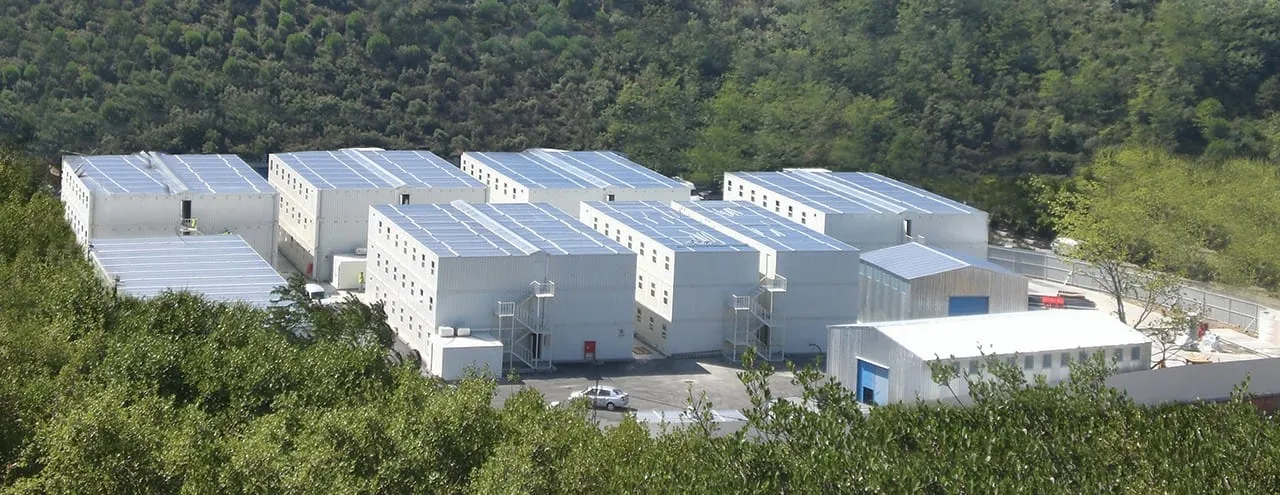
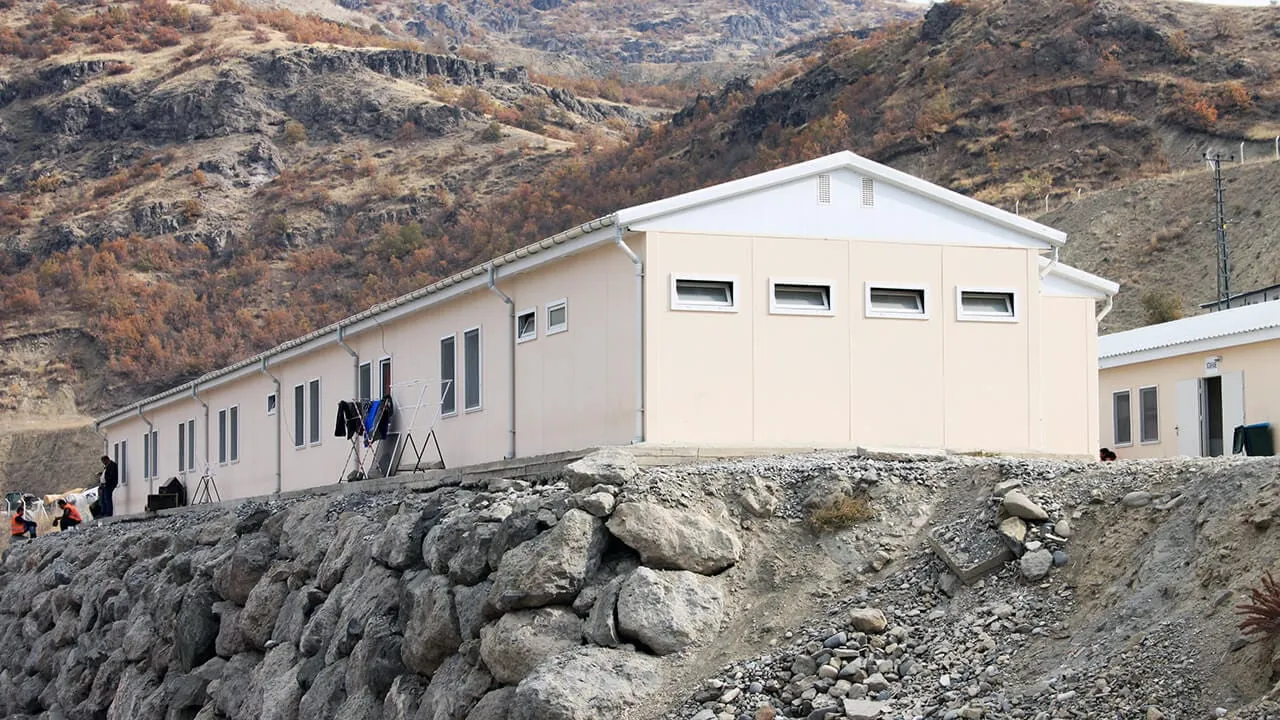
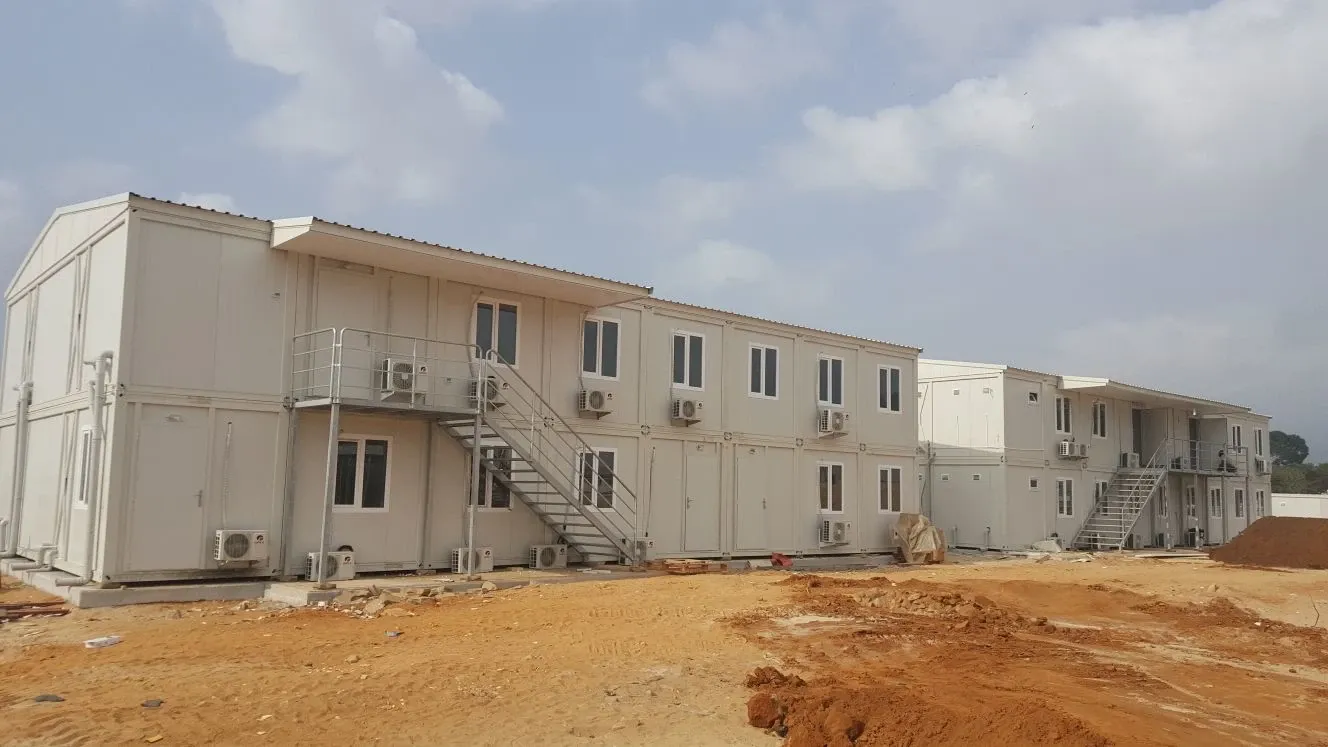
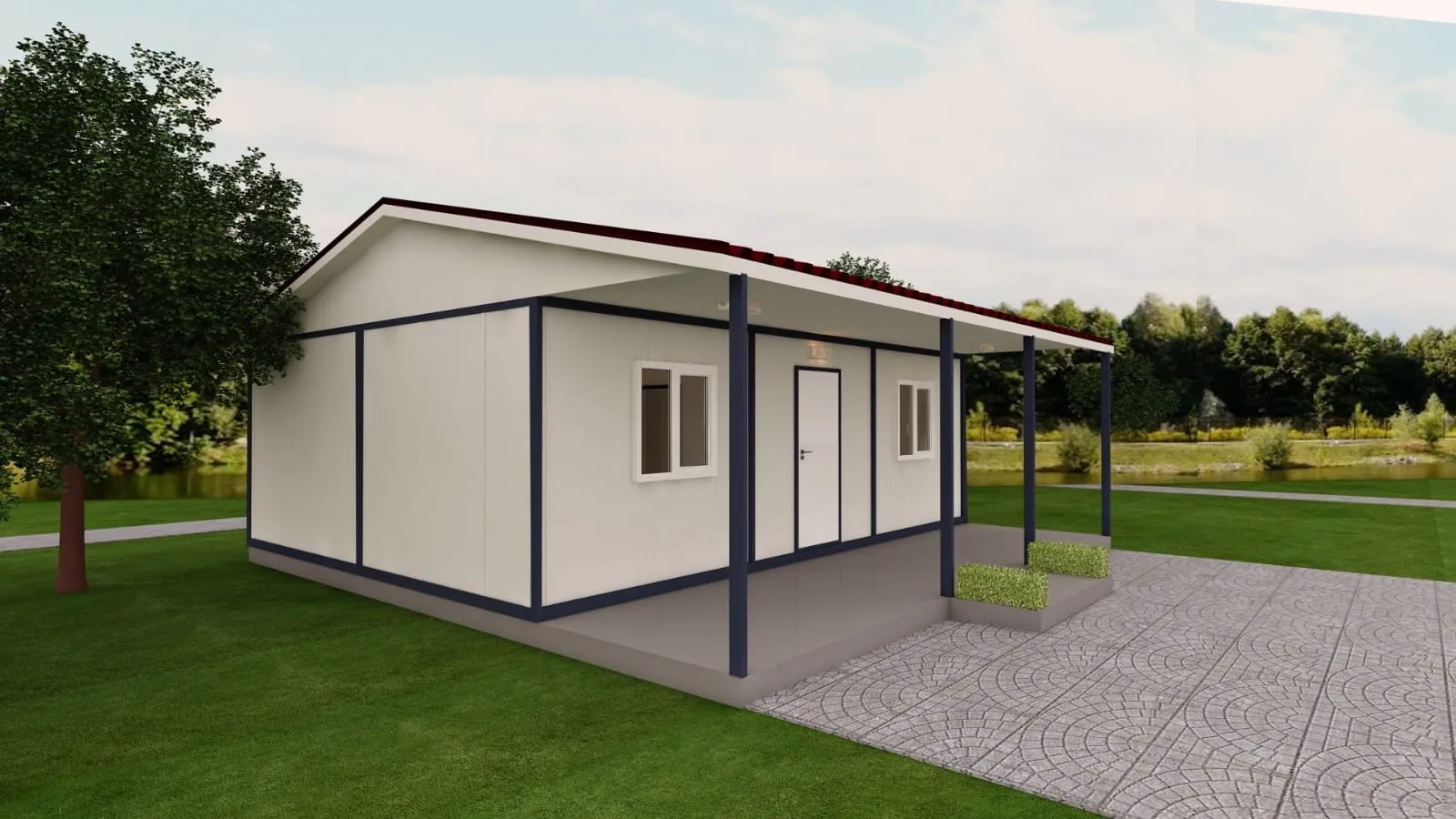
Typical building list for a 400-person oil field camp
An indicative programme for a container camp, sized with the IFC/EBRD benchmarks for workers' accommodation. Every camp is recalculated for its own headcount, rotation and client standard, but the proportions below hold for most oil and gas camps.
| Building | Capacity | 20 ft modules |
|---|
| Worker dormitories | 300 beds, 2 per room | 150 |
|---|
| Supervisor dormitories | 80 single rooms | 80 |
|---|
| Senior staff units | 20 single rooms with en-suite shower and WC | 20 |
|---|
| Ablution blocks | about 38 WCs, 25 urinals, 38 showers and 36 washbasins | 24 |
|---|
| Kitchen and dining | 200 seats per sitting, two sittings, cold and dry stores | 27 |
|---|
| Laundry | washers, dryers and an ironing area | 4 |
|---|
| Recreation and gym | TV room, games room, gym | 12 |
|---|
| Clinic | consultation, treatment, 2-bed observation, pharmacy | 4 |
|---|
| Prayer room | with a separate washing area | 6 |
|---|
| Offices | camp management and meeting room | 12 |
|---|
| Guard posts | gate and perimeter | 4 |
|---|
| Total | 400 beds | about 343 modules, roughly 4,900 m² |
|---|
Module: 2.4 × 6 m (20 ft). Worker rooms give about 7 m² per person; the IFC/EBRD range is 4 to 5.5 m², so the same module also takes 3 beds when the budget is tight. Ablutions are counted at 1 per 10 people for the 380 without en-suite rooms, urinals at 1 per 15.
How many shipping containers
Bare flat-packed 20 ft units stack ten to a 40 ft high-cube container, so 343 modules start at about 35 containers. Roof sheets, sanitary ware, air conditioners and furniture take part of that space, so the real number is higher and is calculated for each order. Northern Iraq is usually reached by truck through the Habur border crossing; southern Iraq through the port of Umm Qasr; Libya through Misrata, Tripoli or Benghazi, depending on the field.
Rock wool walls, class A2-s1,d0
Oil and gas operators usually require non-combustible materials in camp buildings. Our rock wool sandwich panels are classified A2-s1,d0 under EN 13501-1. That means limited combustibility (A2), very little smoke (s1) and no burning droplets (d0), the class that specifications accept when they say non-combustible. The typical fire safety scope below is confirmed in each offer.
- 100 mm rock wool external walls, 60 mm partitions
- Halogen-free cabling
- Smoke detectors and emergency lighting
- Fire extinguishers in every building
Built for desert sites
Summer temperatures in southern Iraq pass 50 °C, and dust storms sweep across Iraq and Libya in spring and summer. The wall and roof build-up is chosen for that, and the offer states which one is quoted.
- Thick insulation in walls and roof
- Ventilated second roof sheet that shades the main roof
- Split air conditioner in every room, each on its own circuit
- Gaskets on external doors and windows against dust
- Light grey-white cladding (RAL 9002) that reflects the sun
Containers or panel buildings
Containers suit a camp that moves with the drilling programme or must be standing within weeks. Panel buildings give more square metres for the money in a camp that stays for years. For the same layout we can price both, so the comparison is like for like.
Bolted, so it moves to the next field
Units are joined with bolts, with no site welding. When the field is finished, the camp can be taken down, packed and set up again on the next site.
What to send for a quotation
- Headcount by grade (workers, supervisors, senior staff)
- Rotation and shift pattern
- How long the camp must stand
- Site location and the nearest port or border crossing
- Your accommodation and HSE standard, or the tender specification
- Power and water available on site